
Why games and pastimes matter in assisted living
Games and everyday pastimes do more than fill open hours. In assisted living, they can support memory, movement, conversation, confidence, and a sense of routine. The most enjoyable activities are usually those that match a person’s interests, abilities, energy level, and comfort with groups.
Residents do not need to be highly competitive or especially athletic to participate. A familiar card game, a short walk, a music program, or a quiet craft can provide meaningful engagement. Activities are most successful when participation is invited rather than required.
For residents and families in Spring City, seasonal weather can also shape the routine. Indoor options are especially useful during cold winter days, periods of rain, or hot and humid summer weather. Outdoor activities may be more comfortable during mild spring and fall conditions.
What are the most popular games in assisted living?
The most popular games are generally familiar, adaptable, and easy to explain. Many residents prefer activities that encourage conversation without creating pressure to perform.
Common choices include:
- Bingo: Large-print cards, clear calling, and shorter rounds can make bingo easier to follow. Small prizes are optional; the social experience is often the main attraction.
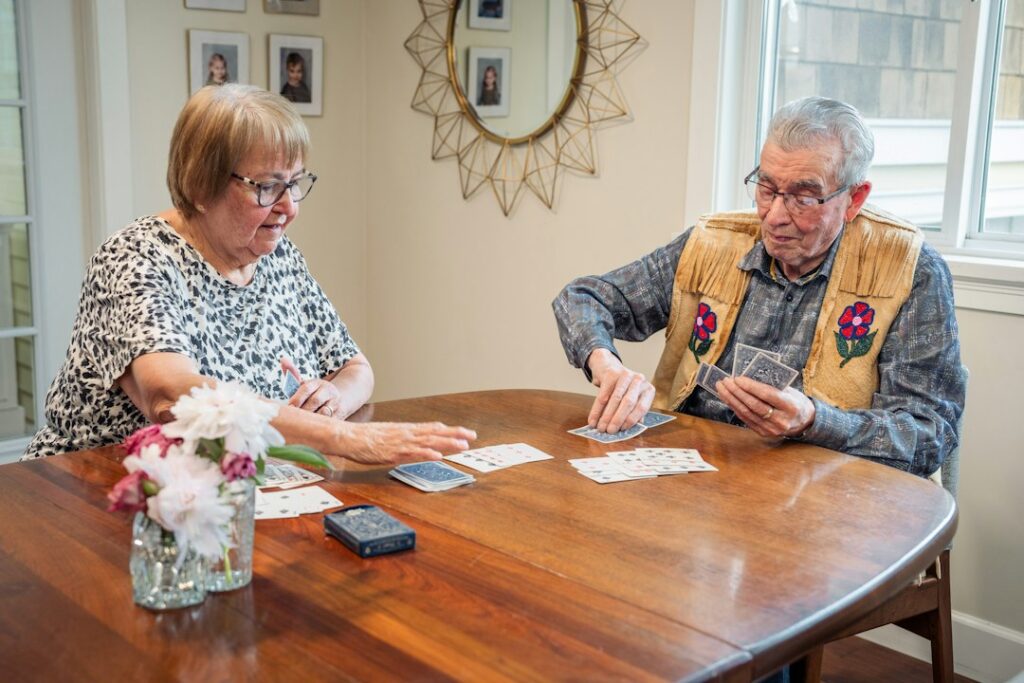
- Card games: Simple games such as Uno-style matching games, Go Fish, Old Maid, Rummy, or modified bridge can be adjusted for different skill levels.
- Word games: Word searches, crossword puzzles, category games, and “finish the phrase” activities encourage memory and language without requiring strenuous movement.
- Trivia: Questions about music, history, food, television, local traditions, or school days often prompt stories as well as answers.
- Board games: Checkers, dominoes, backgammon, and simplified versions of familiar board games can work well when pieces are large and rules are reviewed patiently.
- Jigsaw puzzles: Large-piece puzzles with strong color contrast are often more accessible. Working on a puzzle together can be social even when residents do not talk continuously.
A common misconception is that games must be challenging to be worthwhile. For many older adults, repetition and familiarity are reassuring. The activity can still be mentally engaging because residents are making choices, recalling information, and interacting with others.
Which activities are best for residents with memory loss?
Residents with memory loss often benefit from activities that are familiar, structured, and focused on enjoyment rather than winning. A successful activity should not depend heavily on recalling recent events or following many changing rules.
Helpful options may include:
- Sorting objects by color, shape, or size
- Matching cards or pictures
- Looking through themed picture books
- Singing familiar songs
- Folding towels or pairing socks
- Decorating simple cookies or assembling fruit
- Completing large-piece puzzles
- Exploring a memory box with safe, recognizable objects
- Responding to music, rhythm, or gentle movement
Instructions should be offered one step at a time. Demonstrating the activity may be more effective than giving a long verbal explanation. If a resident loses interest, becomes frustrated, or repeats the same action, the activity can be simplified or paused.
The goal is not to test memory. A resident may enjoy an activity even if the name of the game, the score, or the instructions are forgotten shortly afterward.
What are good quiet pastimes for residents who prefer smaller groups?
Not everyone enjoys a crowded activity room. Quiet pastimes can be just as meaningful and may be more comfortable for residents who are shy, easily tired, sensitive to noise, or accustomed to spending time independently.
Reading is one option, although standard print may be difficult for some residents. Large-print books, magazines, newspapers, audiobooks, and short stories can provide more accessible choices. Reading aloud in a small group may appeal to residents who enjoy listening but have difficulty reading independently.
Other quiet activities include:
- Coloring with large, easy-to-grip pencils or markers
- Knitting, crocheting, or simple textile work
- Writing letters or recording family stories
- Arranging flowers or caring for indoor plants
- Listening to music
- Watching birds from a window or patio
- Completing word searches
- Practicing gentle breathing or stretching
- Looking through family photographs
Pastimes should be adapted to vision, hearing, hand strength, and attention span. For example, high-contrast materials may be easier to see, while lightweight tools may be more comfortable for residents with arthritis.
How can assisted living activities include residents with limited mobility?
Limited mobility does not prevent participation. Many games and hobbies can be done while seated at a table, in a supportive chair, or from a wheelchair-accessible area.
Seated exercise may include hand stretches, ankle movements, rhythm exercises, balloon taps, or light coordination games. Movement should remain within each resident’s safe range and should stop if there is pain, dizziness, shortness of breath, or unusual fatigue.
Other accessible options include:
- Seated bowling with lightweight pins
- Beanbag toss using a table or floor target
- Tabletop shuffleboard
- Balloon volleyball
- Musical instrument sessions using bells or shakers
- Painting or crafts at an adjustable-height table
- Group singing
- Guided reminiscence discussions

The setup matters as much as the activity. Tables should allow room for mobility devices, pathways should remain clear, and frequently used supplies should be easy to reach without bending or stretching excessively.
How do families choose activities that fit a resident?
The best starting point is the resident’s past interests, not a standard activity schedule. Someone who once enjoyed gardening may prefer plant care, seed sorting, flower arranging, or nature discussions. A former teacher may enjoy trivia, reading aloud, or helping with a word game. A person who worked with tools may appreciate safe building kits, mechanical puzzles, or hands-on projects.
Families can ask practical questions:
- Did the resident prefer group activities or individual hobbies?
- Which music, sports, foods, or holidays brought back positive memories?
- Does the resident enjoy competition, cooperation, or simply watching?
- What time of day is energy usually highest?
- Are there vision, hearing, balance, or hand-movement concerns?
- Does the activity create enjoyment, or does it seem frustrating?
Interests may change after a move to assisted living. A person who once loved a complicated game may now prefer a shorter version or a more social format. Flexibility is more useful than insisting that an old hobby be continued exactly as before.
What makes an activity comfortable and respectful?
A good activity is accessible, voluntary, and paced for the people taking part. Residents should not be singled out for mistakes, pressured to compete, or treated as though every activity is therapeutic homework.
Helpful practices include:
- Use large print and high-contrast materials.
- Keep instructions short and repeat them as needed.
- Offer practice rounds before keeping score.
- Allow residents to watch before joining.
- Make it acceptable to leave early or take a break.
- Reduce background noise when hearing is limited.
- Provide enough lighting without glare.
- Use stable chairs and clear walking paths.
- Celebrate participation, humor, creativity, and conversation rather than only winning.
Games and pastimes are most valuable when they help residents feel connected and capable. A familiar activity can open the door to conversation, bring back a cherished memory, or simply make an ordinary afternoon more enjoyable.
